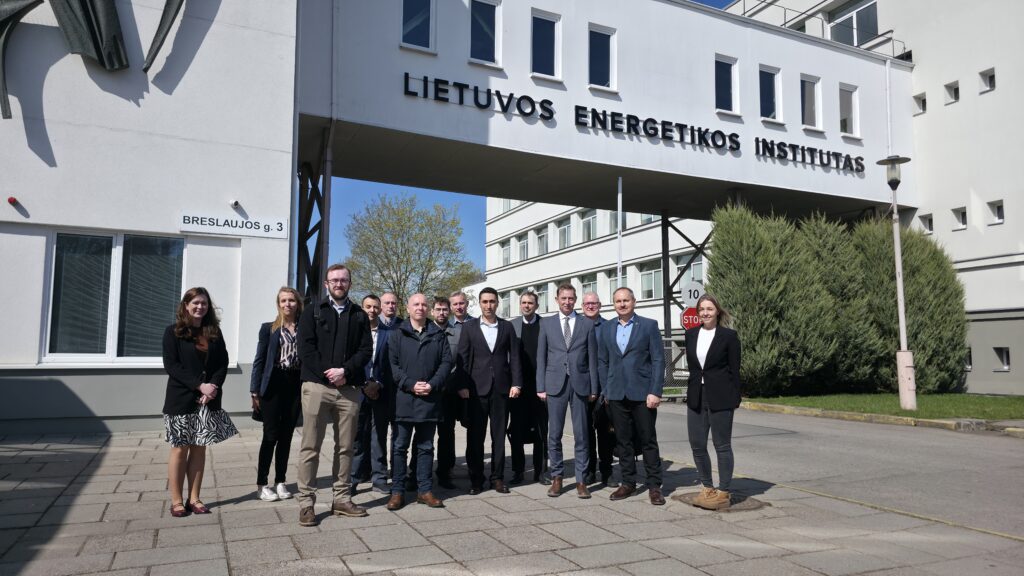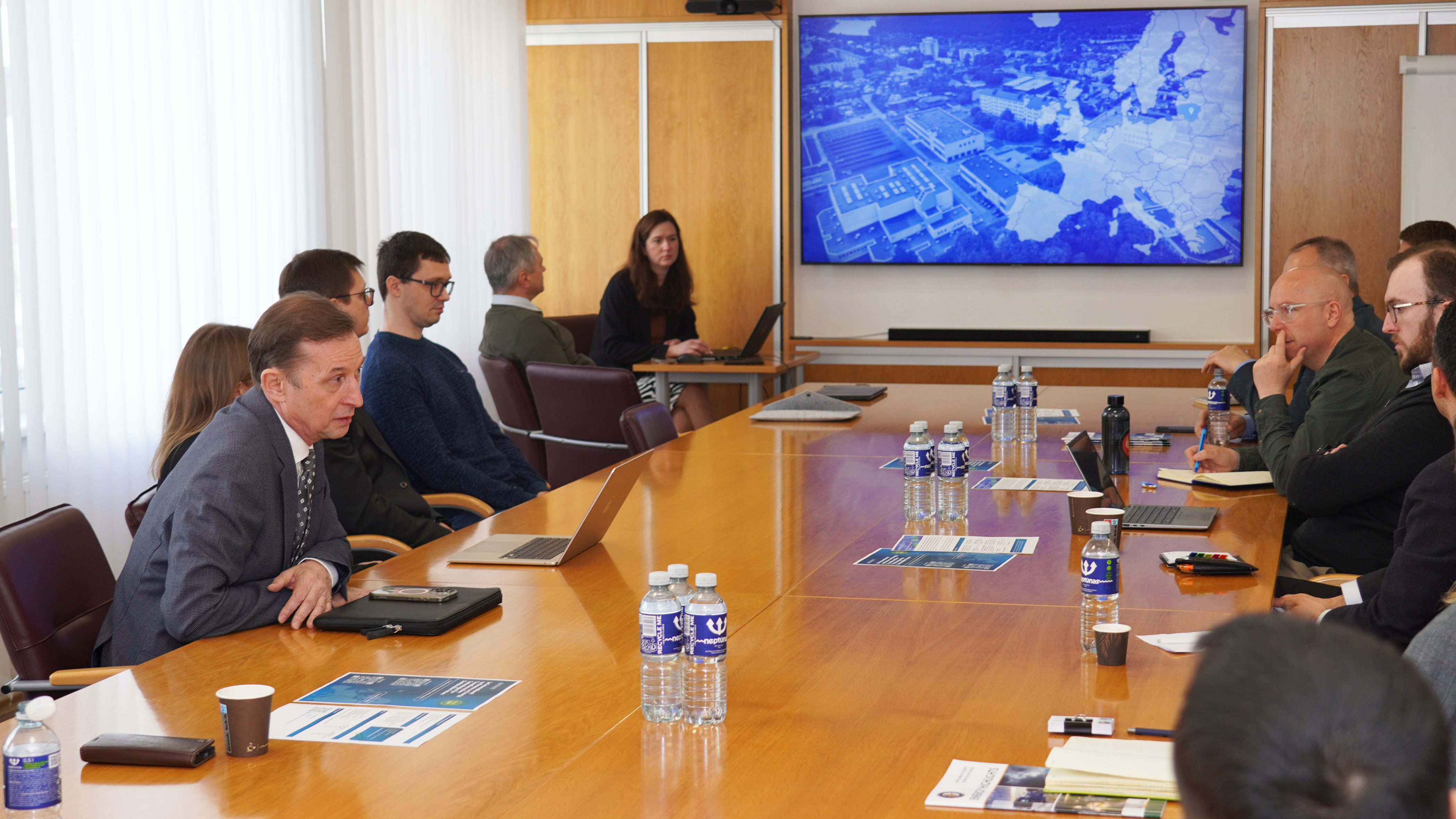


On 14 April, a delegation of experts from the NATO Energy Security Centre of Excellence (ENSEC COE), led by its Director Colonel Gytis Kazokas, visited the Lithuanian Energy Institute (LEI.
The purpose of the visit was to strengthen inter-institutional cooperation and discuss the applicability of LEI’s ongoing scientific research to defense and energy security needs. The meeting aimed to identify potential joint research directions and technological solutions that could contribute to strengthening NATO’s energy resilience.
Presentation of advanced research
At the beginning of the meeting, LEI activities, research divisions, and ongoing projects were presented by LEI Director Prof. Dr. Saulius Gudžius. He reviewed the institute’s scientific achievements, international projects, and research directions.
Deputy Director of LEI and researcher at the Laboratory of Combustion Processes, Dr. Raminta Skvorčinskienė, presented her research on reducing friction in water transport using advanced surface modification technologies. She described an experimental method based on the Leidenfrost effect, which aims to reduce liquid resistance through the formation of a vapor layer.
Deputy Director of LEI and researcher at the Plasma Processing Laboratory, Dr. Andrius Tamošiūnas, presented the GIFFT project, which aims to develop an innovative burner capable of operating with four different fuel types: biomass, green electricity, hydrogen, and natural gas.
Discussion of Cooperation Opportunities
The activities and main research directions of the Laboratory of Nuclear Installation Safety were presented by researcher Dr. Egidijus Urbonavičius, emphasizing the laboratory’s contribution to the development of safe and advanced nuclear technologies.
Researcher Dr. Edgaras Misiulis from the Laboratory of Heat-Equipment Research and Testing delivered a presentation titled “Why We Started Developing a Drone R&D Hub for Advanced Propeller Design”, focusing on unmanned aerial vehicle technologies and the development of advanced propeller design and aerodynamics.
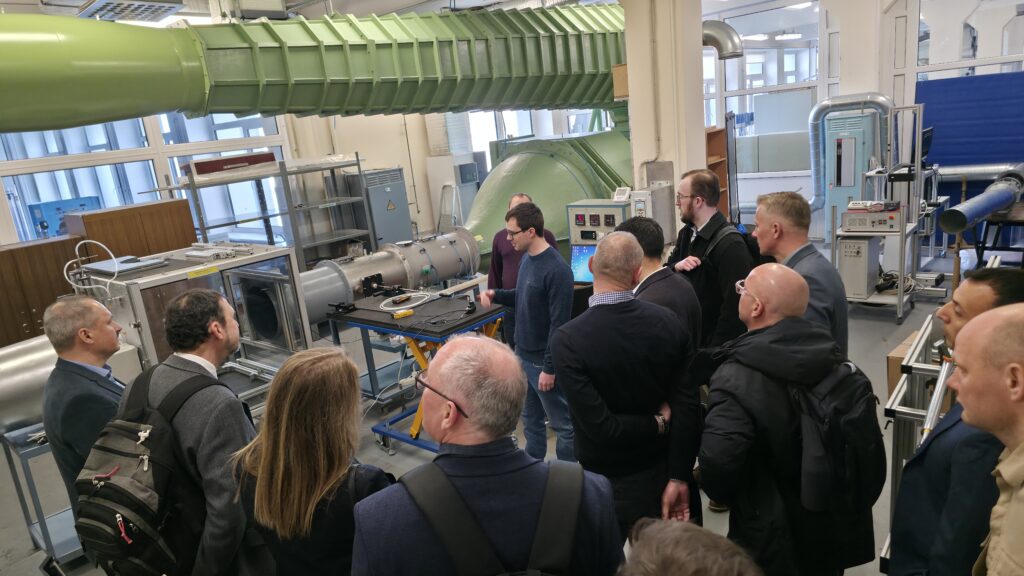
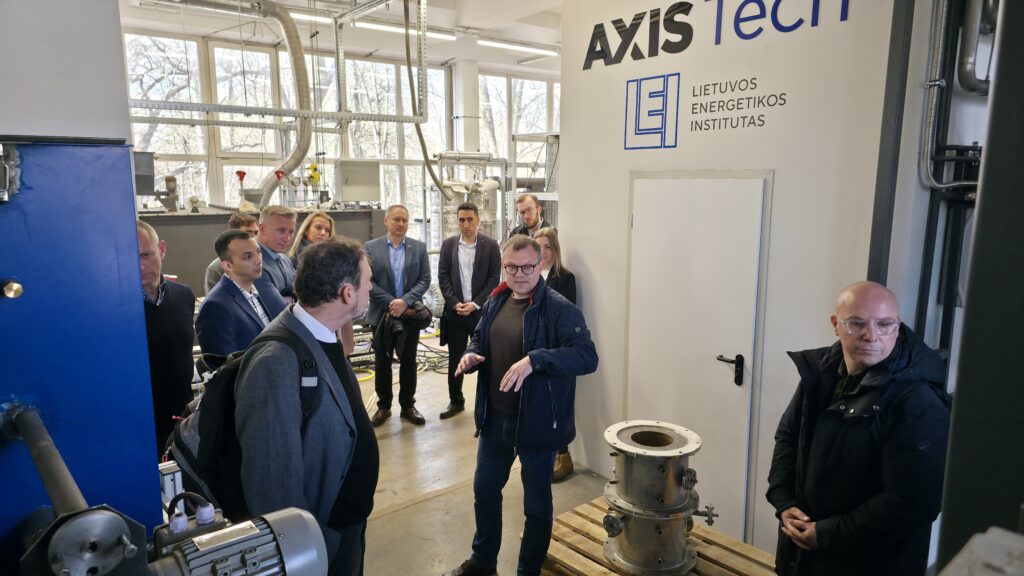
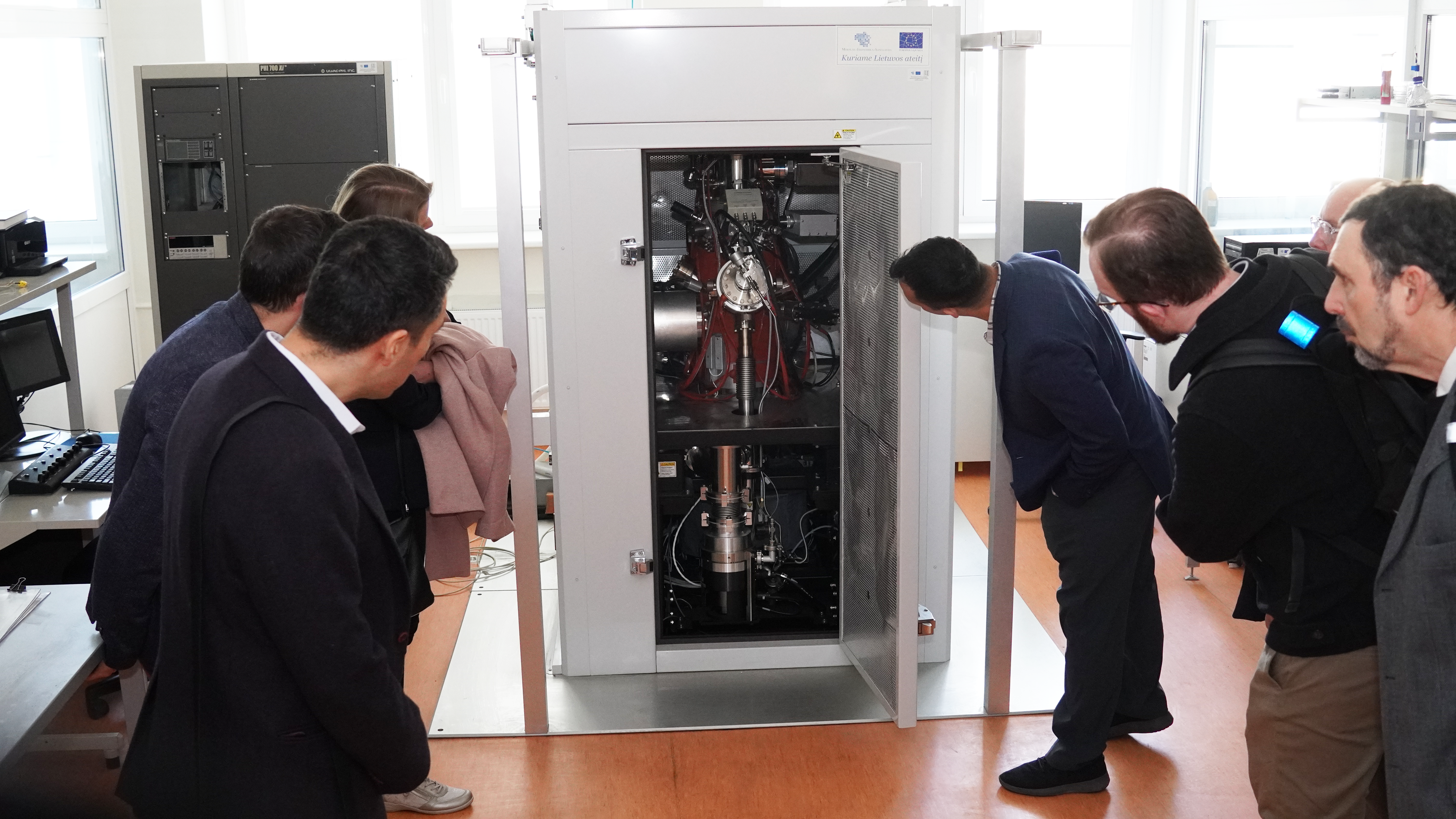
After the presentations, the delegation visited LEI research subdivisions: the Laboratory of Heat-Equipment Research and Testing, the Center for Hydrogen Energy Technologies, the Laboratory of Combustion Processes, and the Nuclear Engineering Laboratory. During the tour, the guests were introduced to the infrastructure, experimental equipment, and ongoing research activities.
The visit concluded with discussions on future cooperation and potential joint research initiatives in energy security.