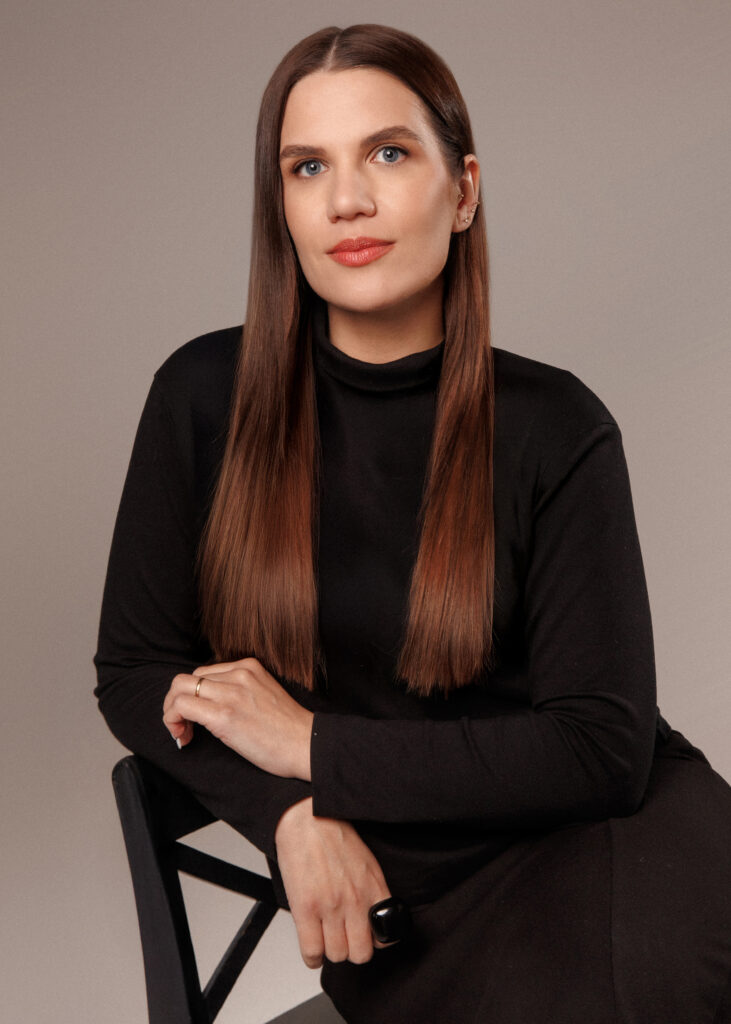


“A conversation becomes a catalyst for change when it produces more than mutual understanding,” says Goda Raibytė-Aleksa, moderator of the ENTRUST conference.
For Goda Raibytė-Aleksa, meaningful dialogue is not just about sharing ideas – it must also lead towards action. She believes that many of today’s challenges cannot be addressed within the boundaries of a single discipline or sector. Bringing together scientific expertise, business experience, policy and community perspectives is essential for understanding complex issues and developing solutions that work in practice.
Goda Raibytė-Aleksa is a science journalist, communicator and educator dedicated to making science more accessible to society. She is a freelance journalist, television and radio presenter, event host, and author.
Ahead of ENTRUST, we spoke with her about the role of science communication in building trust, the importance of dialogue between science and society, and how collaboration across disciplines can help turn knowledge into meaningful action.
– We live in a time of information overload, where artificial intelligence can generate answers in a matter of seconds. In your view, how can we maintain trust in reliable knowledge and ensure that scientific evidence and expertise do not get lost in the growing information noise?
– Such a difficult question. I think we are all human beings, trying to understand life. But we haven’t been given tools to distinguish what’s real. So “maintenance” comes from critical thinking, information literacy, science communication, etc. Scientific institutions must be proactive and not expect the society to just magically start trusting them 100%. In a perfect world, ideally, it would happen this way but in reality – unfortunately not.
Going back to science communication – it’s one of the most powerful tools we have. We must have a strategic systematic approach not just try something and see if it works. Institutions must take responsibility to teach their scientists to communicate (because it’s a skillset and you can learn it as anything else in this world). Also, I see we still view our society as monolite. But it’s not – so many different groups, different people, with different worldview, level of knowledge, background, etc. If we try to speak to them like they are one – we will fail. So, as Carl Sagan correctly said, we must temper our criticism with kindness.
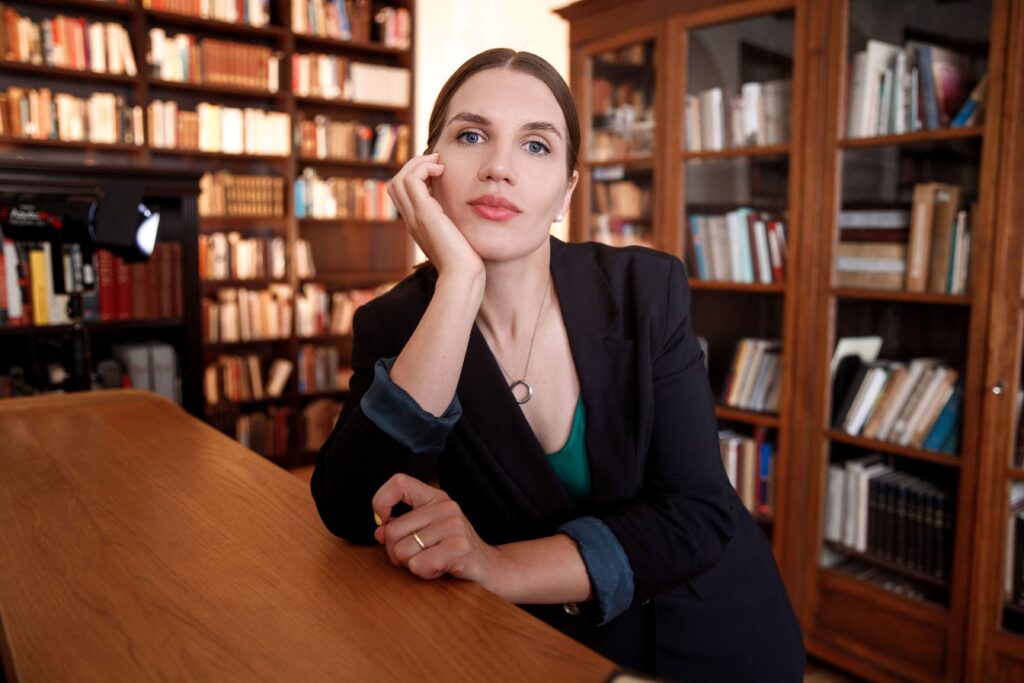
– As a science journalist, what do you see as the biggest challenge in science communication today: explaining complex topics, capturing and maintaining audience attention, or building public trust?
– Probably strategic thinking or the lack of it, also evidence-based decisions and actions. Trust me, those who spread disinformation and fake news have all the answers and use tools to boost it. Fake news on steroids. Repeating the same message more loudly is therefore not enough. Scientists and communicators need to understand why people resist it, what they fear losing and who they are prepared to trust.
– In your experience, are there topics that scientists have been communicating consistently, yet society still struggles to hear or fully engage with? Why do you think that happens?
– Anthropogenic climate change, vaccines – just to name a few. I don’t like to put all of the responsibility on society. I think it struggles to fully engage because billions-worth efforts were put into this mistrust and doubt. And it’s been happening for decades!
– You have said that the most important breakthroughs are not born in laboratories or meeting rooms alone, but where different kinds of expertise come together. In your opinion, what helps turn dialogue into something meaningful and effective, rather than just an exchange of opinions? When does a conversation become a catalyst for change? What needs to happen for dialogue to lead to real solutions?
– Not all conversations and ideas turn into action, nor should they. A conversation becomes a catalyst for change when it produces more than mutual understanding. Someone has to take responsibility for the next step. There need to be decisions, resources, deadlines and a way to evaluate whether anything has actually improved.
Also, in my opinion, the environment is extremely important as well. If you are surrounded by proactive professionals, if there’s enough funding for risky research, if you live in a democratic country where you have academic freedom, it becomes much easier. And… a little bit of coincidence. So much amazing research happened because of pure coincidence.
– ENTRUST will bring together researchers, business leaders, innovators, and other stakeholders. Why is dialogue across disciplines and sectors more important than ever today, and what unique value can it create?
– The problems we face, I think, don’t fit neatly in academic departments or professional sectors. AI is a legal, social, economic, ethical and political issue. The same is true of climate change, healthcare, biotechnology and energy.
Researchers can explain what is scientifically possible. Businesses understand how ideas can be implemented and scaled. Policymakers understand regulation and public responsibility. Civil-society organisations and communities can reveal consequences that may remain invisible from inside a laboratory, company or ministry.
But a technology may be scientifically impressive but socially harmful. A policy may be ethically sound but impossible to implement. A business model may be efficient but deepen existing inequalities. Cross-sector dialogue helps identify those tensions before they become failures.