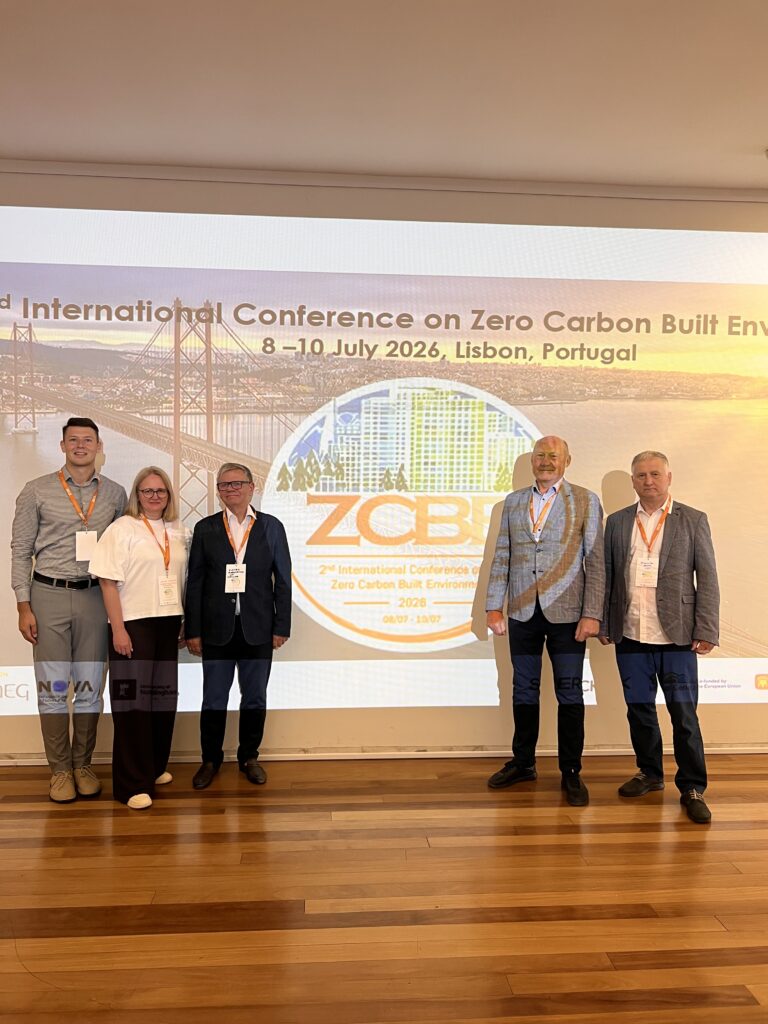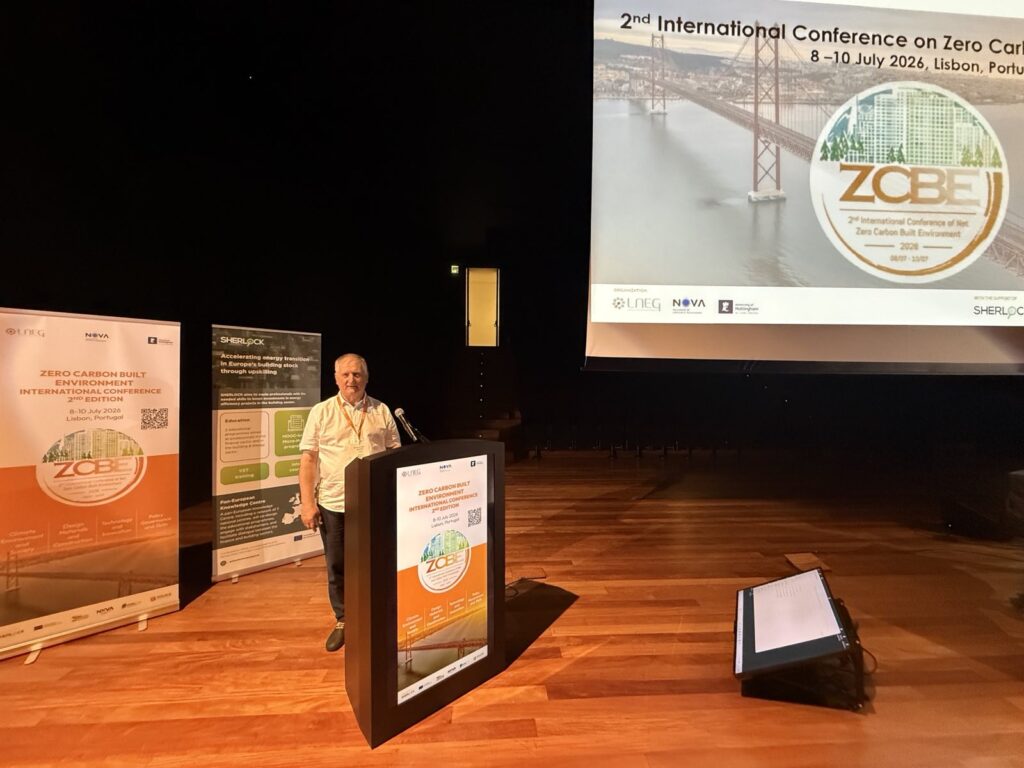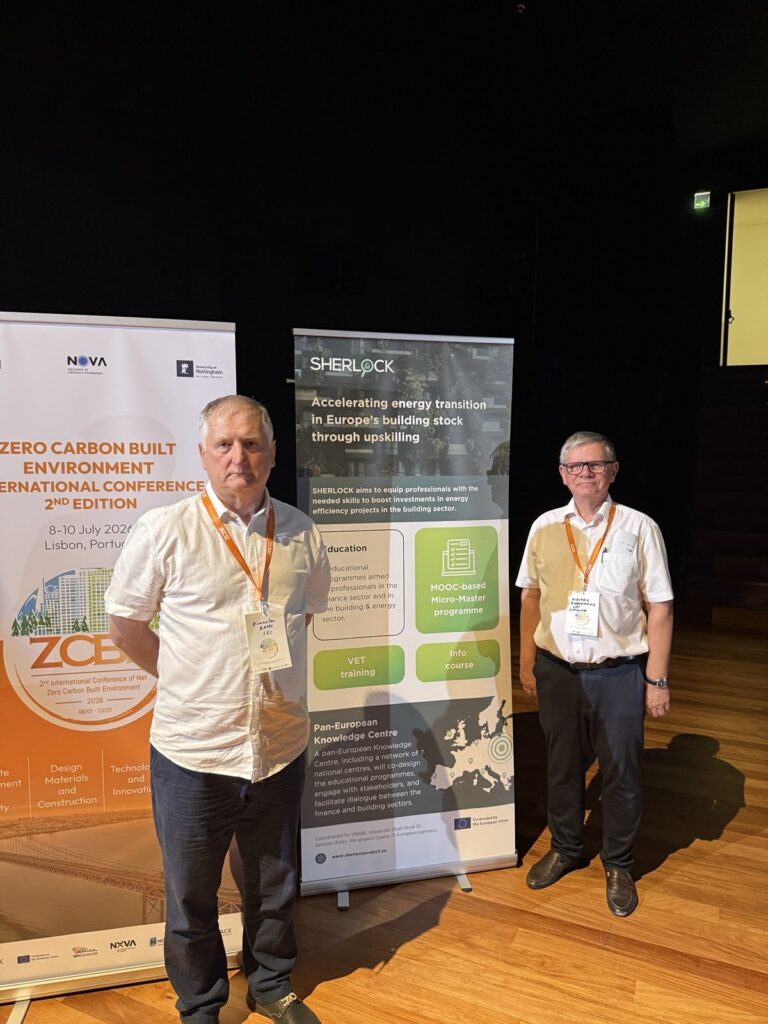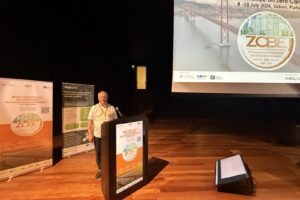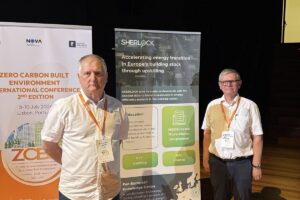


Researchers from the Lithuanian Energy Institute (LEI) – Dr. Sigitas Rimkevičius, Head of the Laboratory of Nuclear Installation Safety, and Dr. Rimantas Bakas, Research Associate at the Laboratory of Heat-Equipment Research and Testing – participated in the “Energy and Sustainability Conference 2026: Supporting the Energy Transition for the Building Stock” together with partners from the SHERLOCK project.
The event was also attended by other project partners from Lithuania – representatives of the Lithuanian District Heating Association (LDHA). The LDHA was represented by its President Dr. Valdas Lukoševičius, Chief Specialist Ramunė Gurklienė, and analyst Vytautas Džiuvė.
The conference was jointly organised by the Portuguese National Laboratory of Energy and Geology (LNEG), NOVA School of Science and Technology (NOVA FCT), and the University of Nottingham, with the support of the European projects SHERLOCK, WeGenerate, and SOLACE. The second edition of the conference brought together researchers, professionals, students, and decision-makers committed to advancing the transition towards a zero-emission built environment.
During the conference, Dr. Rimantas Bakas participated in the discussion “E-learning programs (microcredits) – modern solution to prepare for energy saving in buildings”, which focused on the role of innovative e-learning and microcredential programmes in developing competencies for energy-efficient building renovation.
Following the success of its first edition, the Energy and Sustainability Conference 2026 provided a platform for sharing knowledge, discussing emerging research, and strengthening collaboration across disciplines and sectors. Over the course of three days, the programme featured student workshops, keynote lectures, technical sessions, and opportunities for networking and knowledge exchange.
The built environment plays a central role in addressing climate change, reducing energy demand, and accelerating the integration of renewable energy solutions. Through the contributions presented at the conference, participants promoted new ideas, practical strategies, and lasting partnerships supporting the transition towards carbon-neutral and resilient buildings and communities.