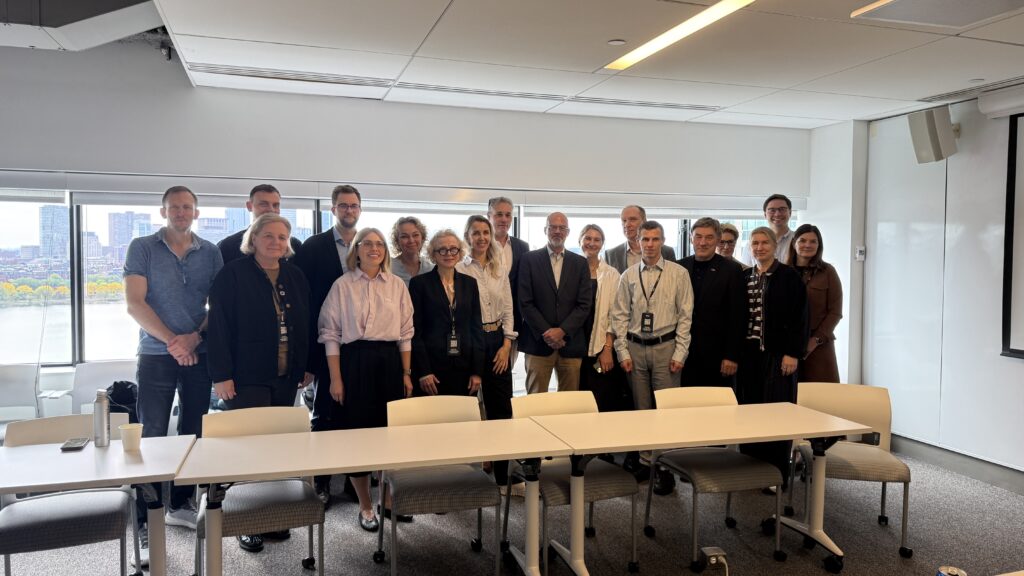
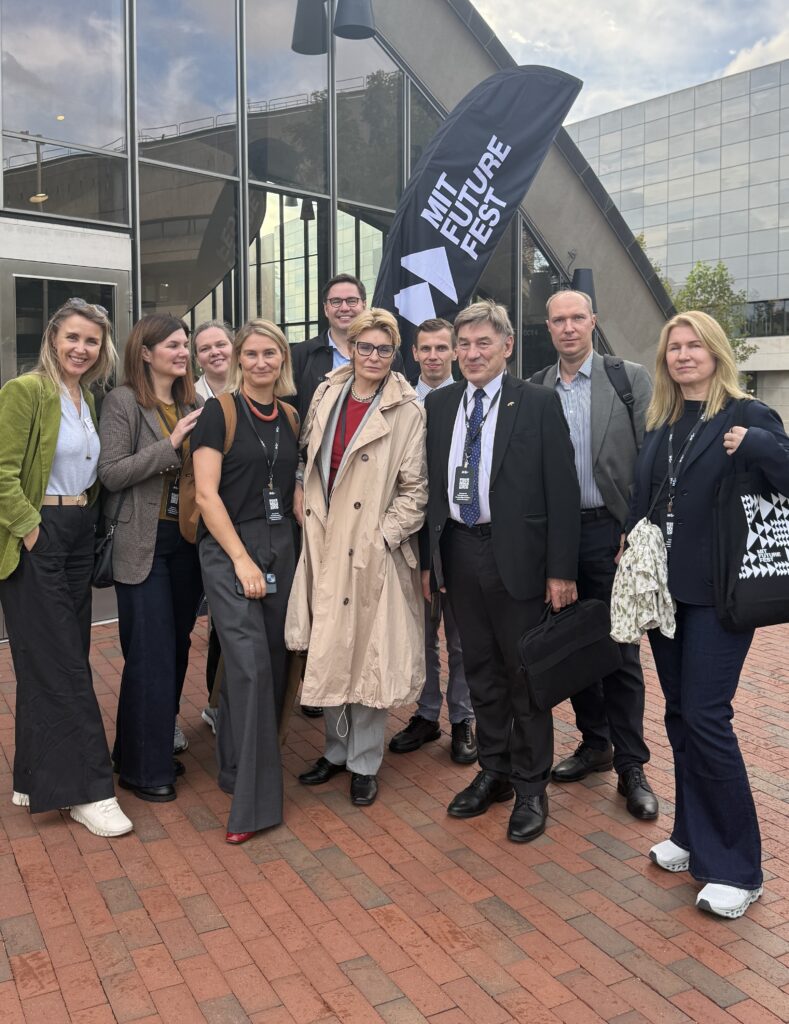
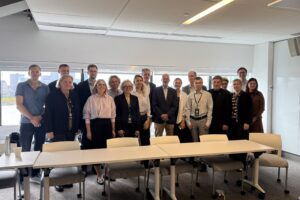
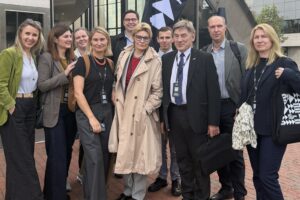
September 30–October 6, a Lithuanian delegation visited the Massachusetts Institute of Technology (MIT) in the United States. More than 20 representatives from Lithuanian universities, research institutes, and companies took part in the visit. Among the participants was Dr. Marius Urbonavičius, Senior Research Associate at the Center for Hydrogen Energy Technologies of the Lithuanian Energy Institute (LEI).
MIT–Lithuania Cooperation: From Research to Joint Projects
The visit was organized by the Lithuanian Consortium for Engagement with MIT, which brings together the country’s universities, research institutes, and business community to foster partnerships with the Massachusetts Institute of Technology.
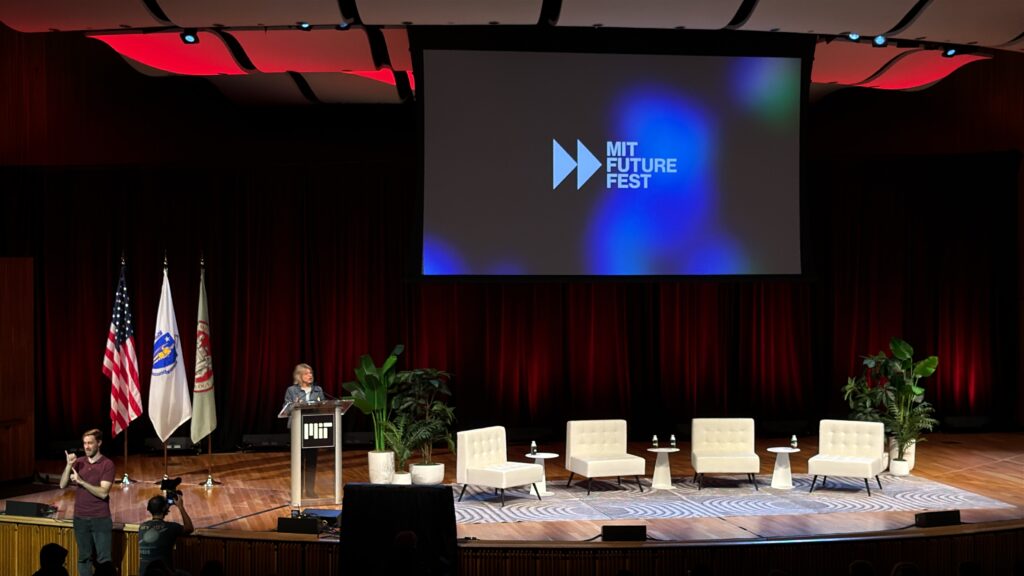
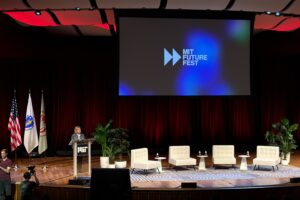
During the visit, delegation members attended sessions at MIT Future Fest, a festival celebrating science, technology, art, and design, and took part in exhibitions and meetings. They also met with representatives of MIT’s Technology Licensing Office (TLO), the Industrial Liaison Program, and Startup Exchange.
During a visit to the MIT Plasma Science and Fusion Center, the delegation gained first-hand insight into nuclear fusion research. At MIT.nano, they were also given a private viewing of Amphibian Drift, an installation created by Lithuanian artists Gediminas and Nomeda Urbonas in collaboration with MIT Professor Markus J. Buehler.
On October 5, the MISTI Lithuania Conference was held at the MIT Media Lab, bringing together around 60 participants from Lithuania, MIT, and the Lithuanian-American community. The program included workshops on MIT–Lithuania collaboration, a networking lunch focused on opportunities for future joint projects, and a discussion with Lithuania’s Ambassador to the United States, Gediminas Varvuolis.
Representatives of MIT and the Lithuanian diaspora were also introduced to three Lithuanian living labs (LLs), which focus on life sciences, advanced manufacturing, and energy transmission.
New Insights and Ideas
According to Dr. Marius Urbonavičius, Senior Research Associate at LEI’s Center for Hydrogen Energy Technologies, the visit offered an excellent opportunity to gain a closer look at the research and innovation taking place at one of the world’s leading technology institutes.
‘The high level of research in biotechnology was particularly impressive. I was also struck by our visits to MIT.nano and the Plasma Science and Fusion Center, where we had the opportunity to explore advanced analytical equipment, learn about the latest research, and see how fusion technologies are being developed. We were also given a brief introduction to Commonwealth Fusion Systems, a company founded within the MIT ecosystem that aims to commercialize fusion technology,’ he said.
Dr. Urbonavičius added that discussions on the future of energy, the development of emerging technologies, and their practical applications were equally valuable. He noted that MIT places considerable emphasis on applying artificial intelligence to research and technology development to streamline research processes, save time, and support decision-making.
‘Visits like this not only provide fresh ideas but also create opportunities to connect directly with researchers and explore potential areas for collaboration,’ he said.
Next Steps: MIT Representatives to Visit Lithuania
Cooperation between Lithuania and MIT will continue in Lithuania. On October 21, MIT leaders and researchers will take part in the Lithuania–US Science and Innovation Forum.
One of the forum’s keynote speakers will be MIT Professor Markus J. Buehler, a member of the US National Academy of Engineering and the Jerry McAfee Professor in Engineering at MIT.He will deliver a keynote address and participate in a discussion.
The Lithuanian delegation’s visit to MIT, followed by the planned visit of MIT representatives to Lithuania later in October, forms part of ongoing efforts to strengthen ties between Lithuania and MIT in science, technology, and innovation.